01
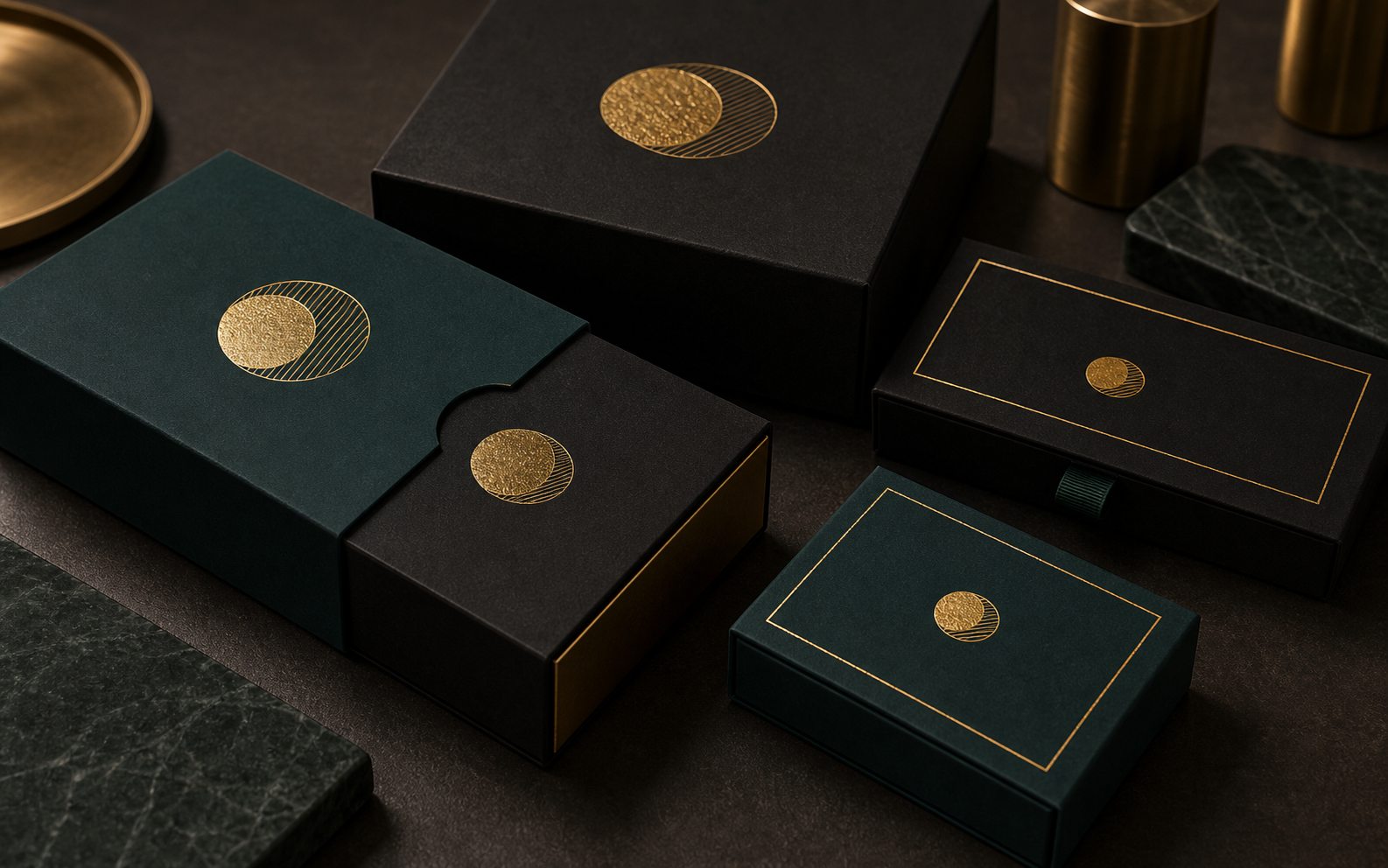
Product boxes and sleeves
Foil logos, fine borders, seals, and small decorative marks for carton sleeves, rigid boxes, and packaging covers.
What we do
We add metallic foil details to packaging and printed materials by using heat, pressure, foil film, and a prepared die. The result can be subtle and premium or bold and highly reflective.
Applications
Product boxes, sleeves, labels, tags, folders, paper bags, invitations, certificates, cards, event materials, and specialty inserts.
Foil can be used for logos, borders, seals, monograms, fine lines, headings, and small decorative details.
Sample applications
These sample visuals show the kinds of printed pieces that can be elevated with foil logos, borders, seals, monograms, headings, fine lines, and small decorative details.
Foil logos, fine borders, seals, and small decorative marks for carton sleeves, rigid boxes, and packaging covers.
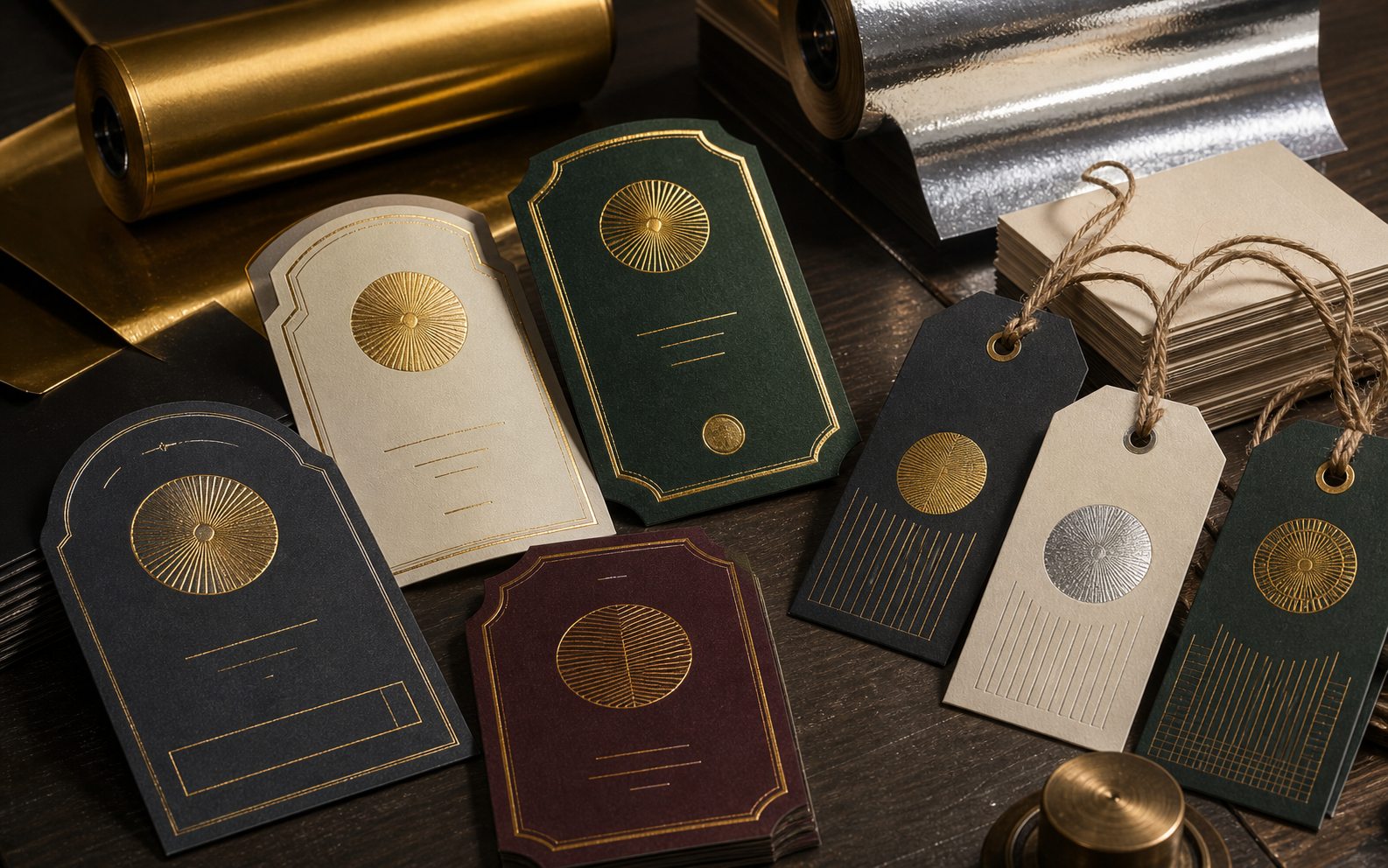
Metallic monograms, product marks, borders, and fine line details for labels, hang tags, and premium product identifiers.
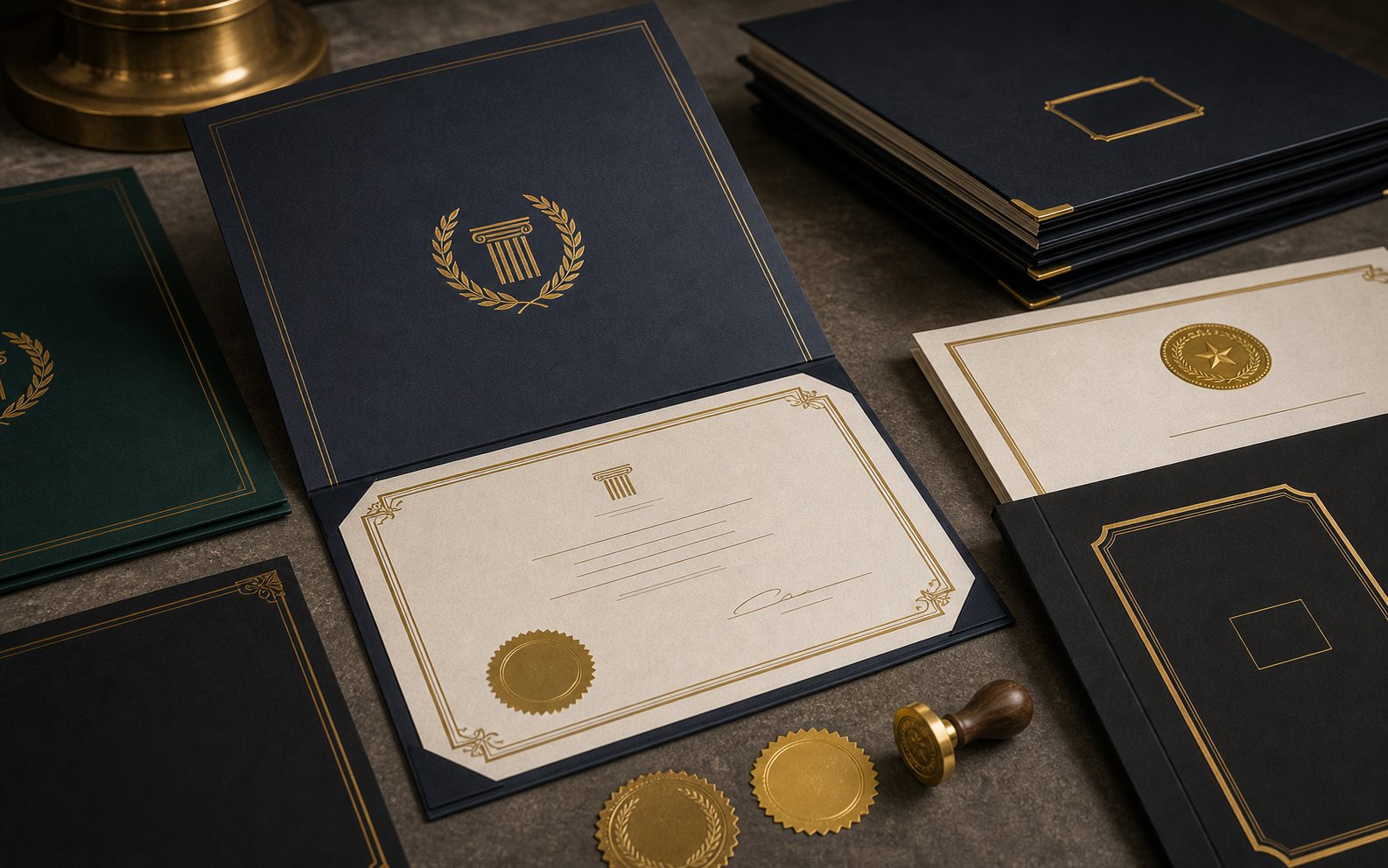
Foil seals, headings, document borders, corner details, and formal accents for certificates and presentation folders.
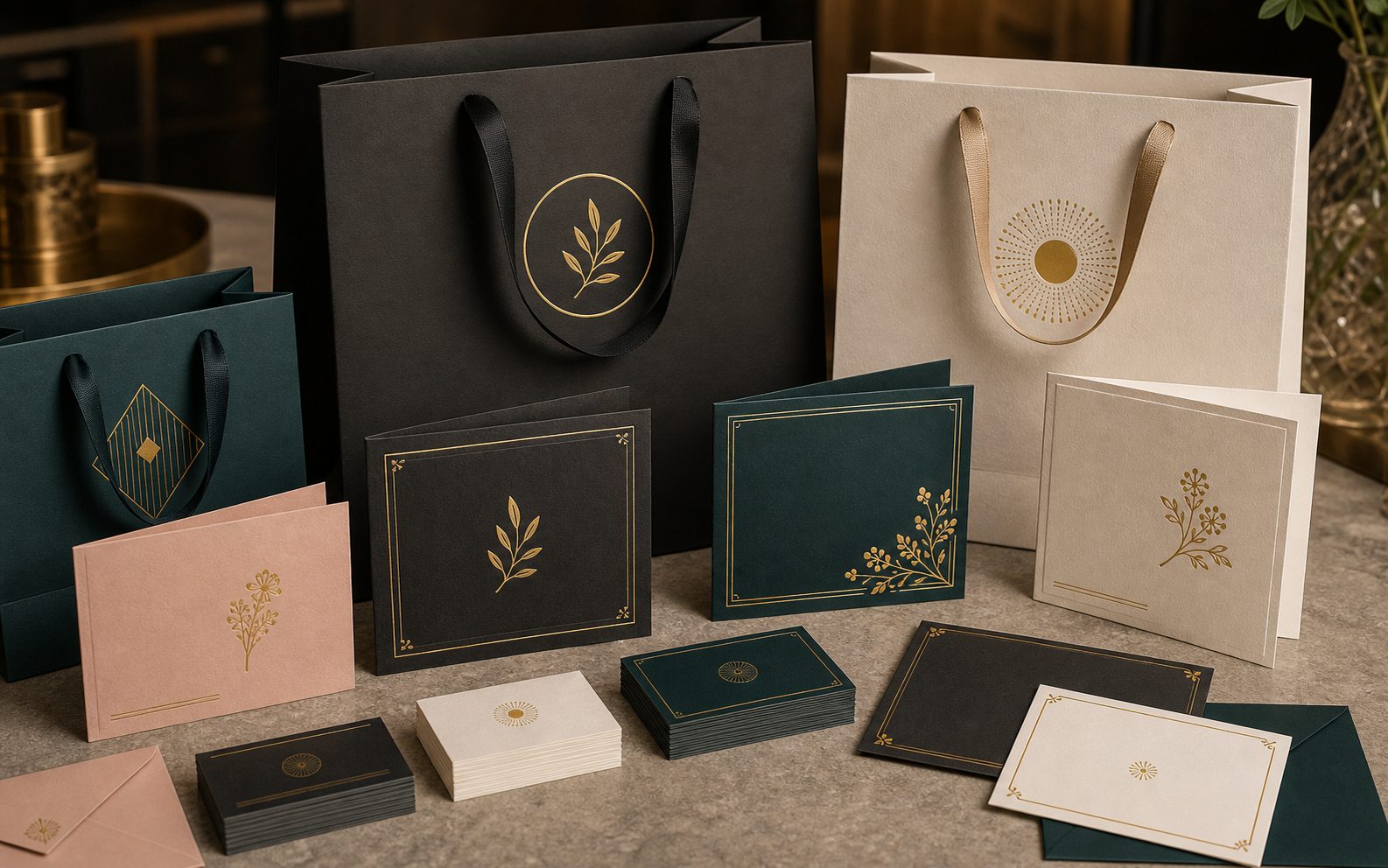
Retail bag marks, thank-you cards, greeting cards, business cards, note cards, and border details for customer-facing pieces.
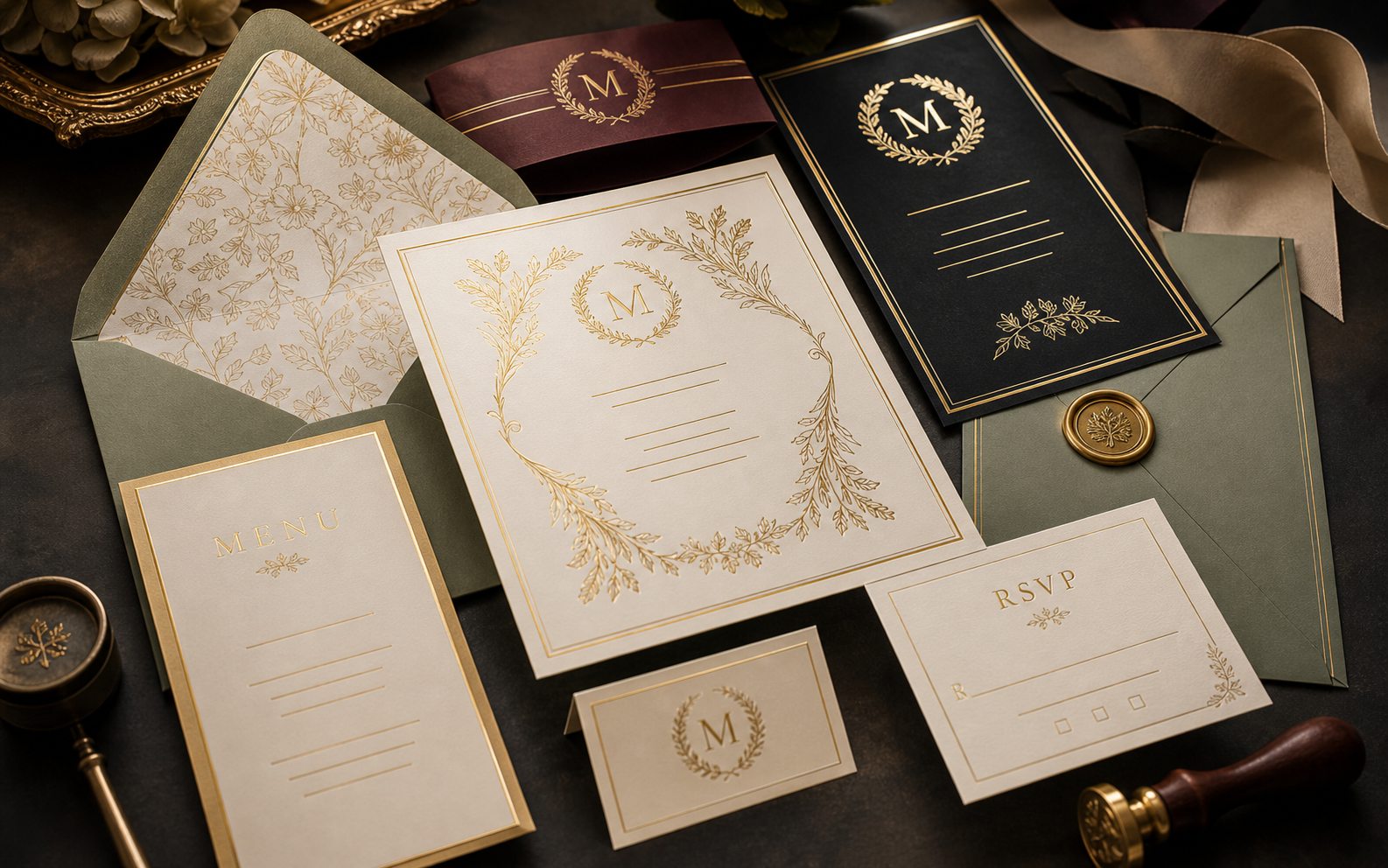
Monograms, seals, borders, headings, and decorative flourishes for invitations, programs, menus, place cards, and RSVP pieces.
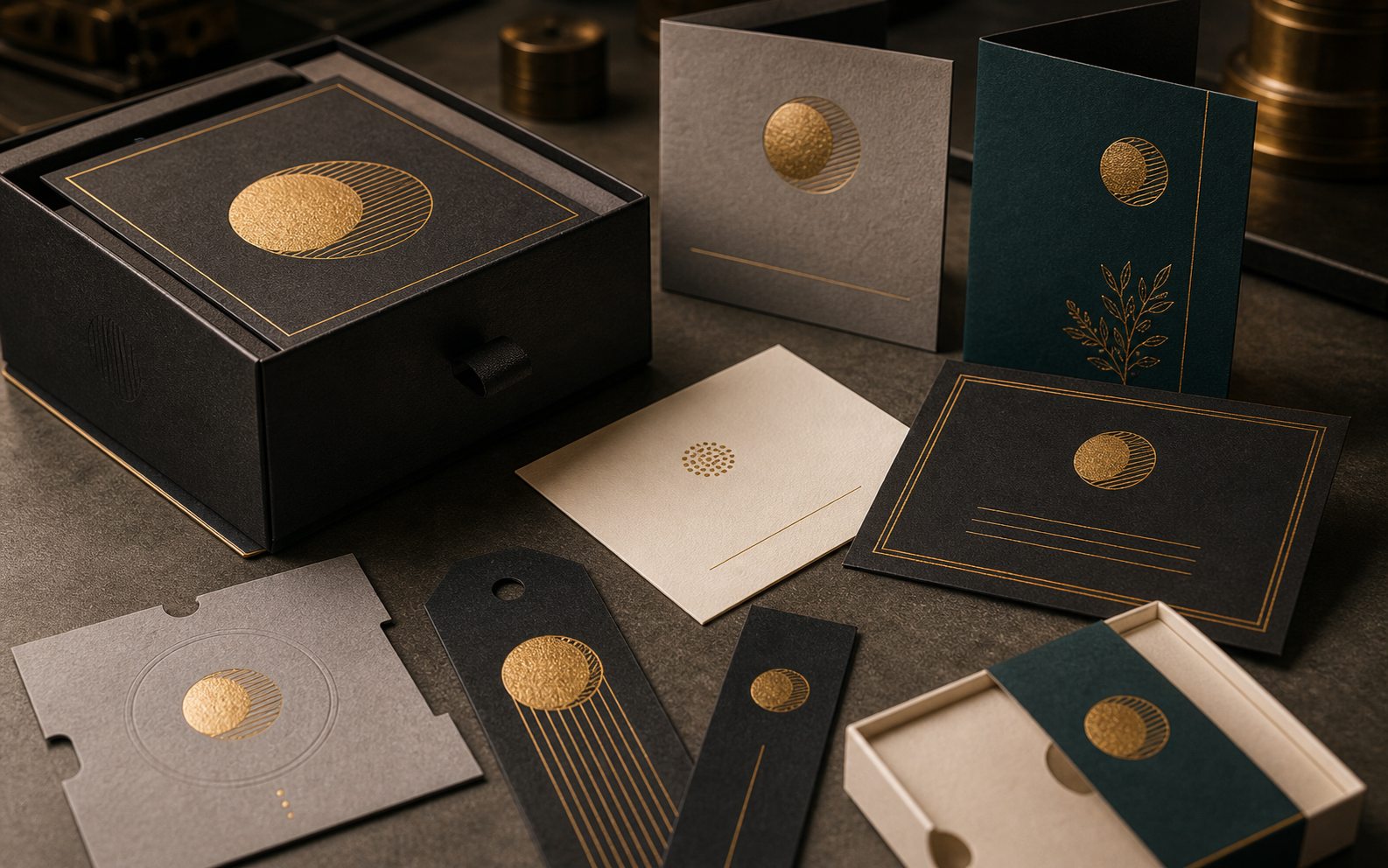
Packaging inserts, belly bands, tray cards, product inserts, warranty cards, and small details that complete the unboxing experience.
Photo examples
These examples show the setup, transfer, and finished-result stages that affect the sharpness and shine of the final impression.
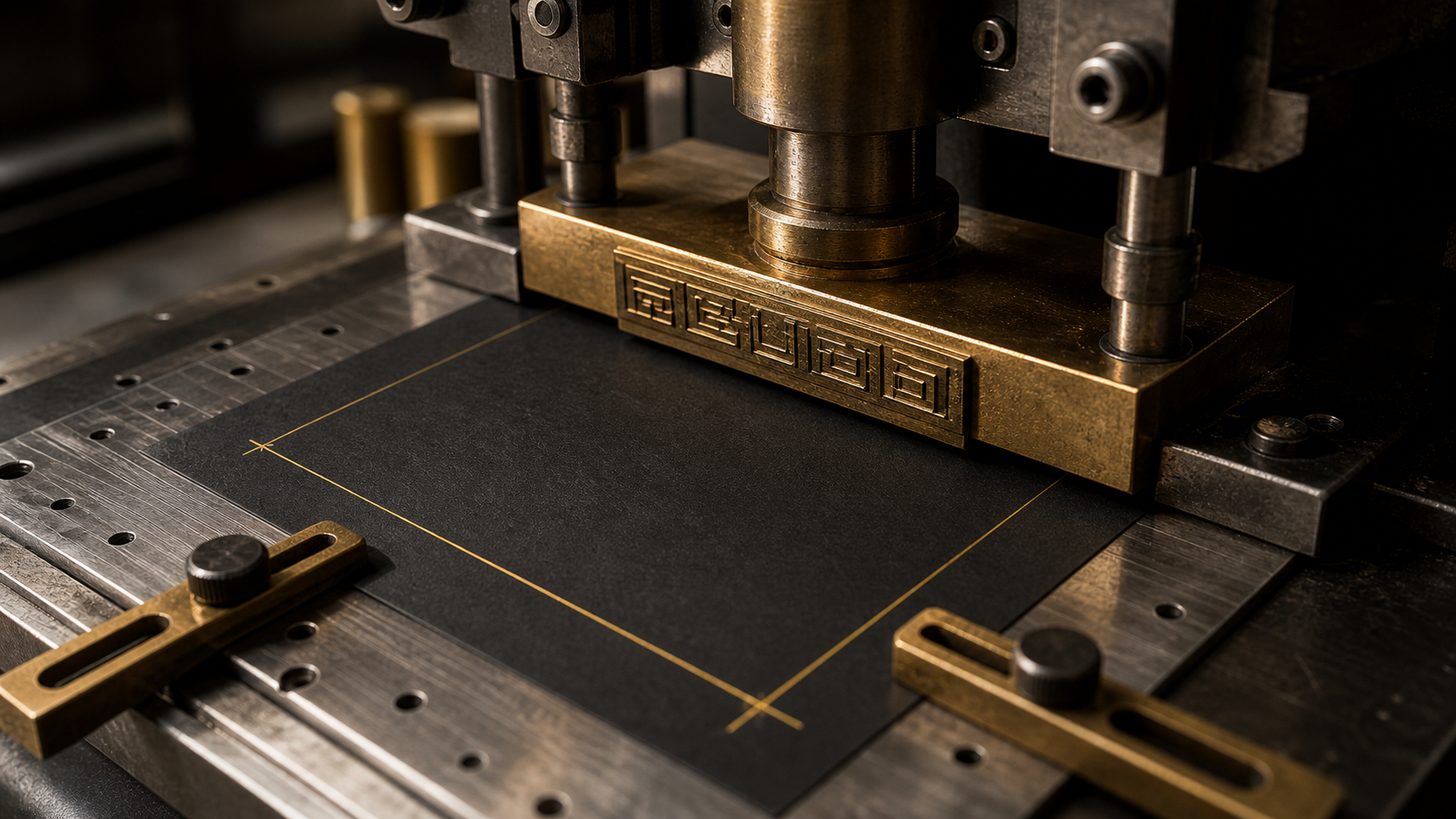
The artwork is turned into a stamping die, then positioned against the stock and guide marks so the foil lands in the correct place.
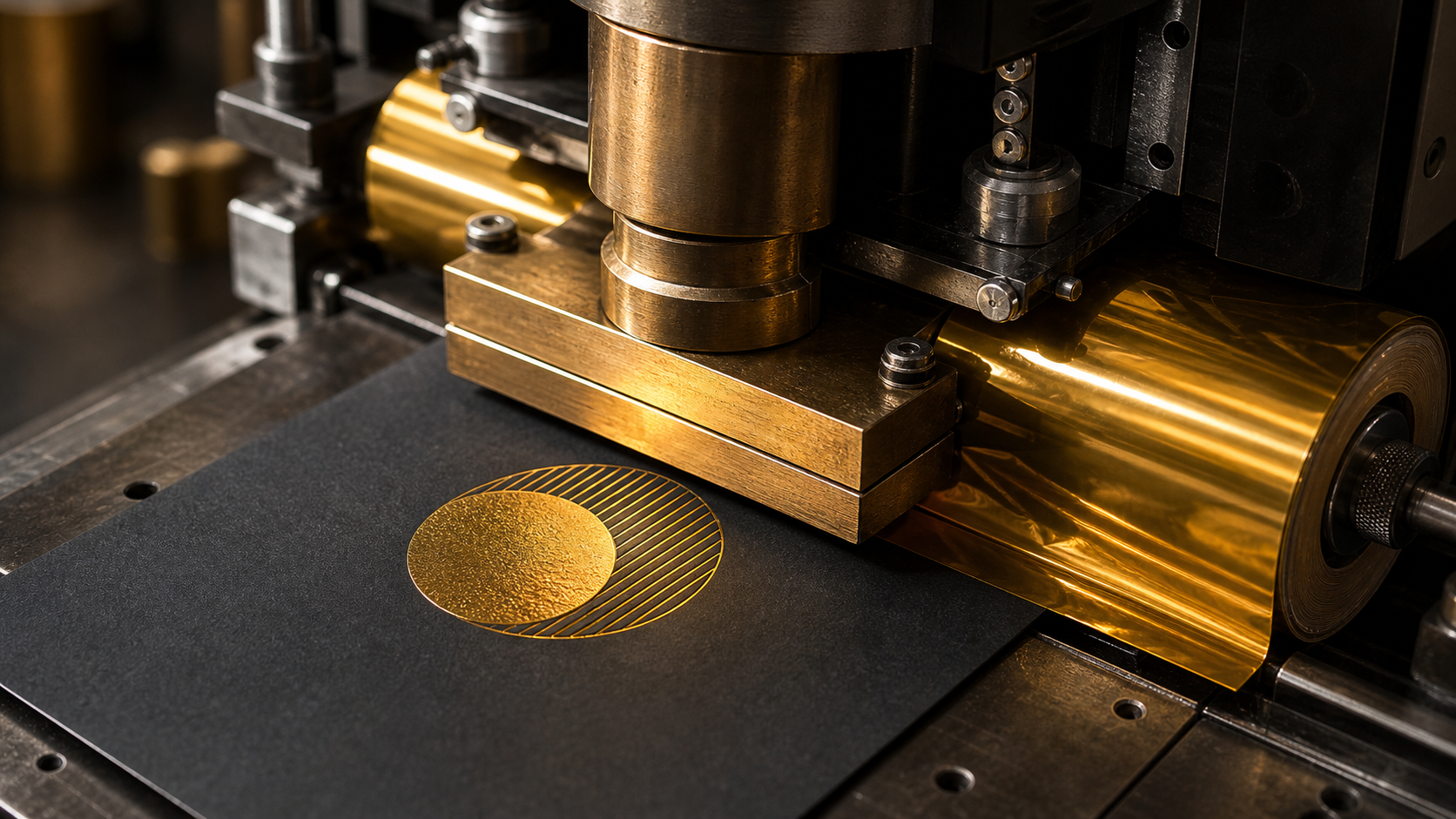
The foil film passes between the heated die and the material. Heat and pressure release the metallic layer onto the surface.
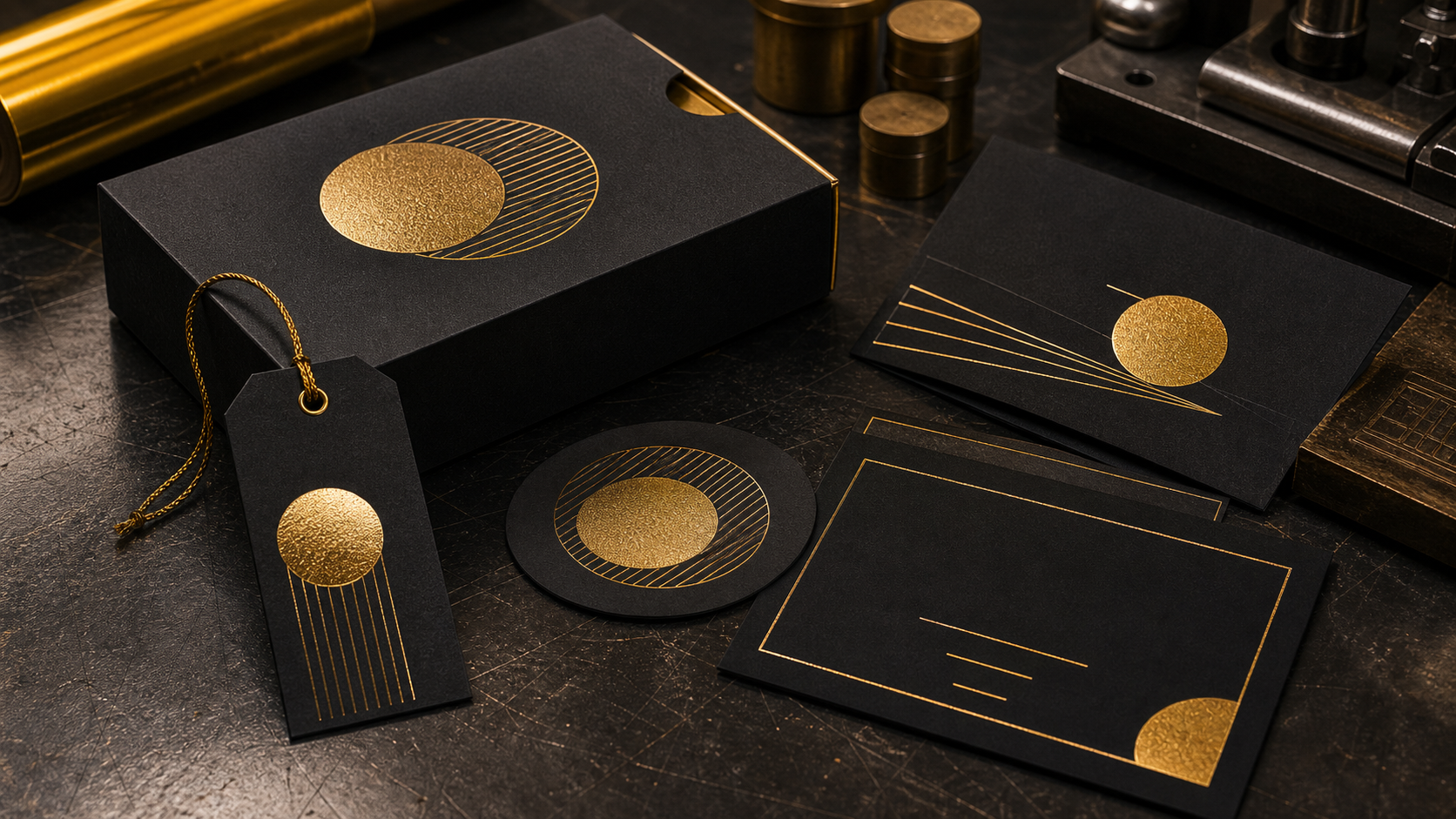
The finished pieces are checked for clean edges, even coverage, registration, shine, and handling marks before turnover.
Machine examples
The right setup depends on material size, foil coverage, registration, run length, and whether the job also needs embossing or die cutting.
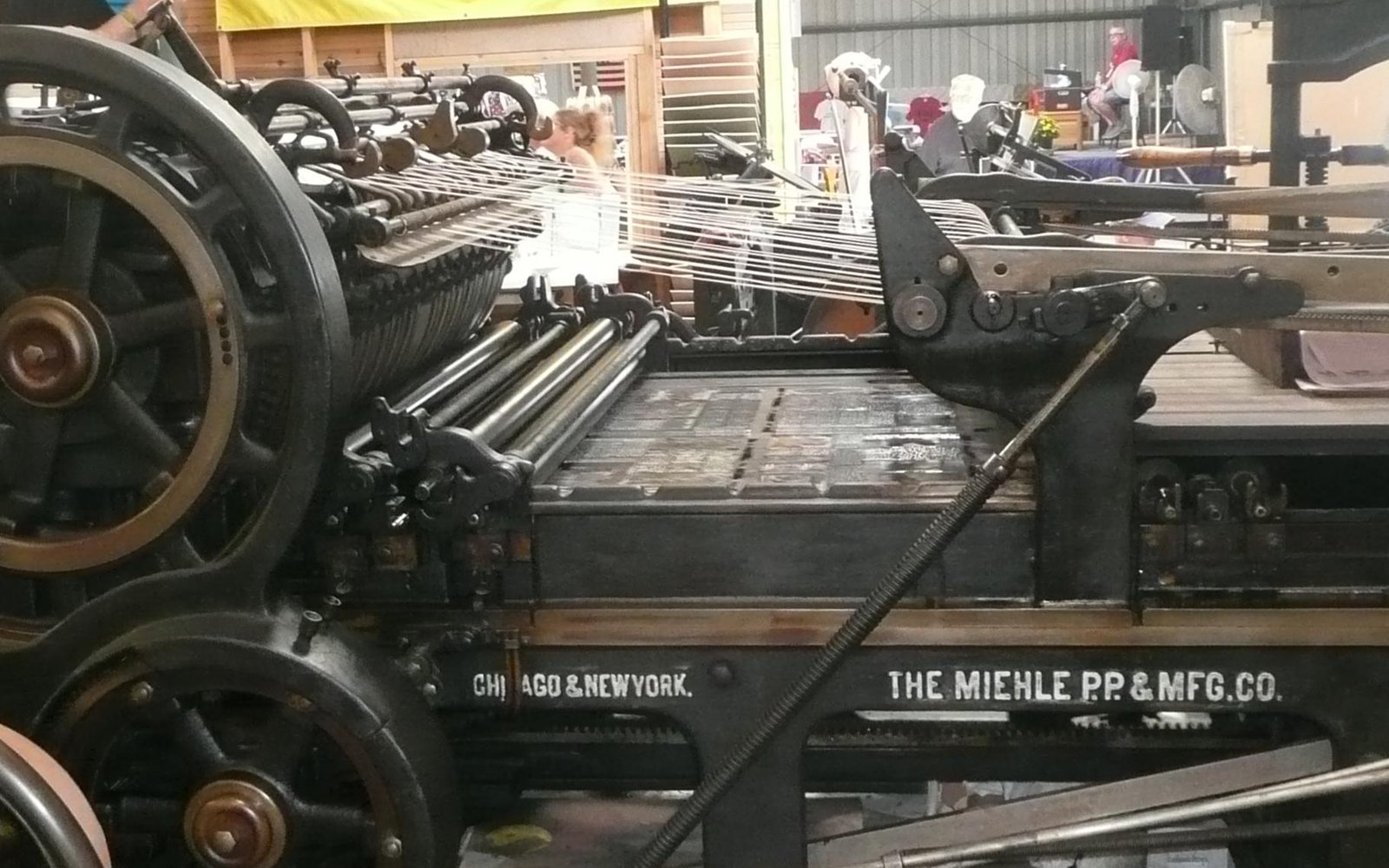
Useful for larger sheets and production work where steady sheet travel, pressure, and repeatable registration matter.
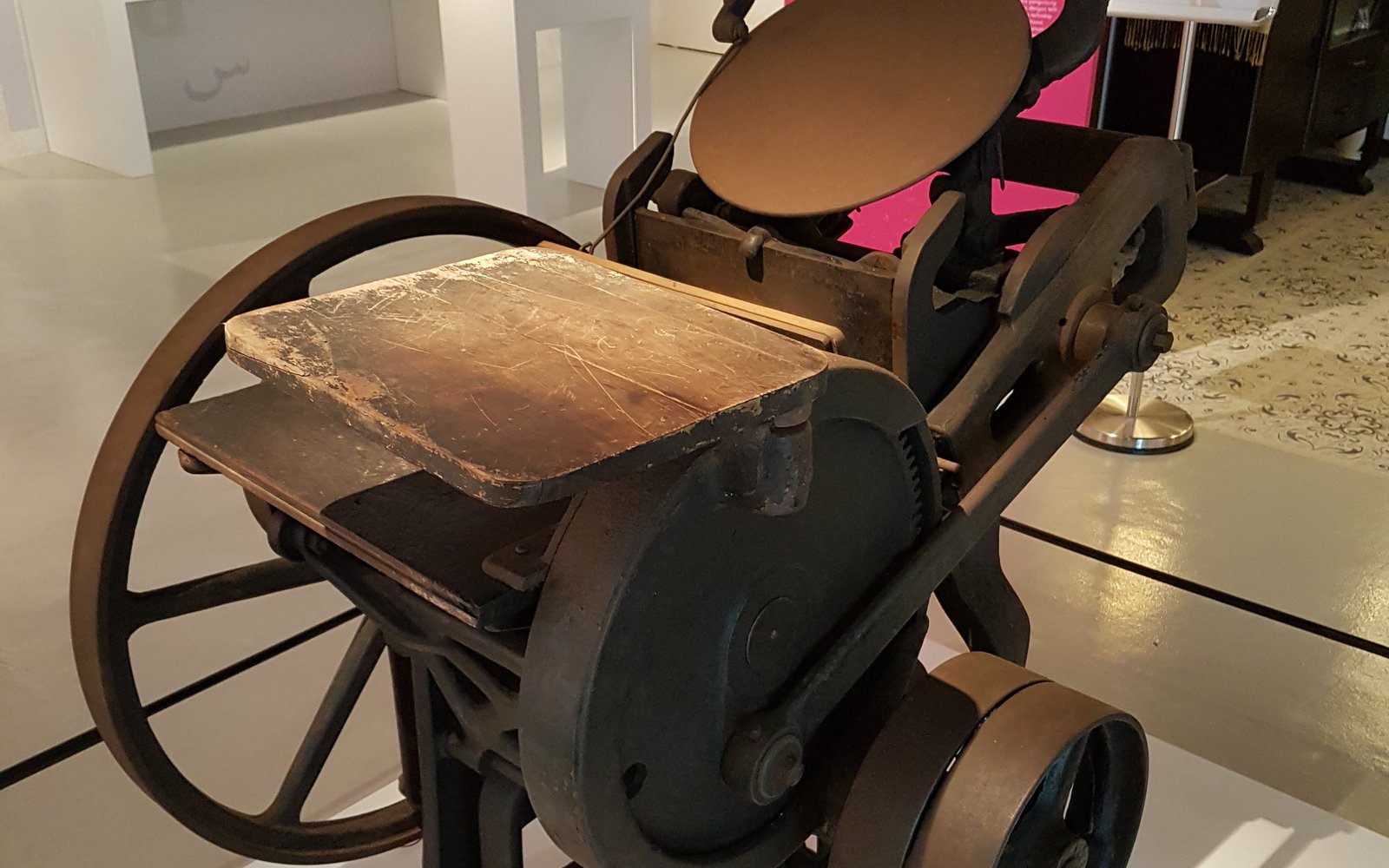
Uses flat pressure between platen and die, often suited for cards, tags, labels, invitations, sleeves, and carton pieces.
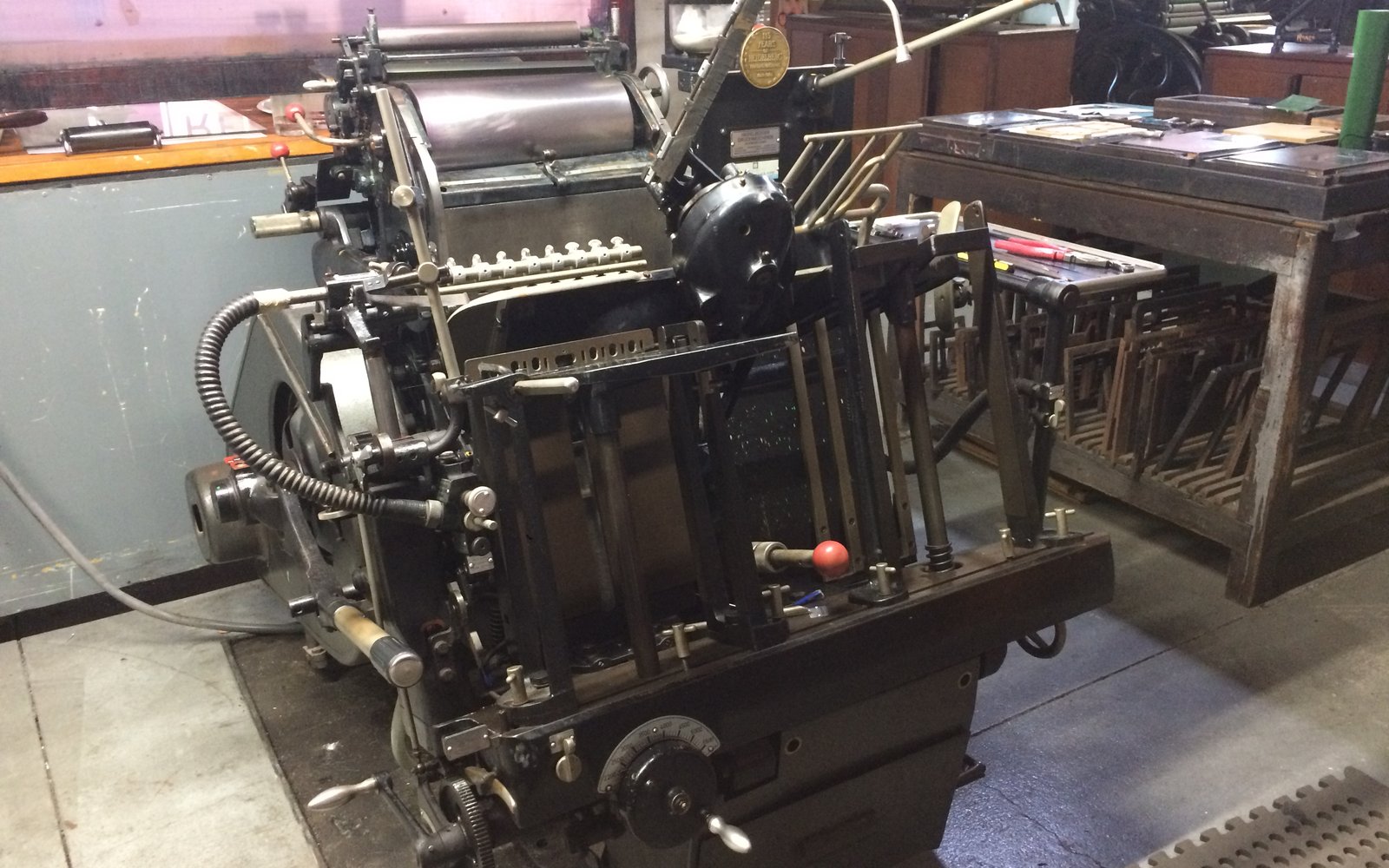
The helicopter or windmill-style platen press used for compact hot-foil jobs with fast sheet feeding and repeatable registration.
Production notes
Clean vector artwork gives the sharpest die and the cleanest foil edge. Fine details and large solids are checked differently.
Smooth, flat paperboard usually stamps better than rough or uneven stock. Coatings and texture affect foil adhesion.
Metallic, pigment, matte, gloss, and holographic foils behave differently depending on the stock and coverage area.
Short runs, samples, and production runs can all be quoted, but setup time and die preparation affect the unit price.
Ready to quote